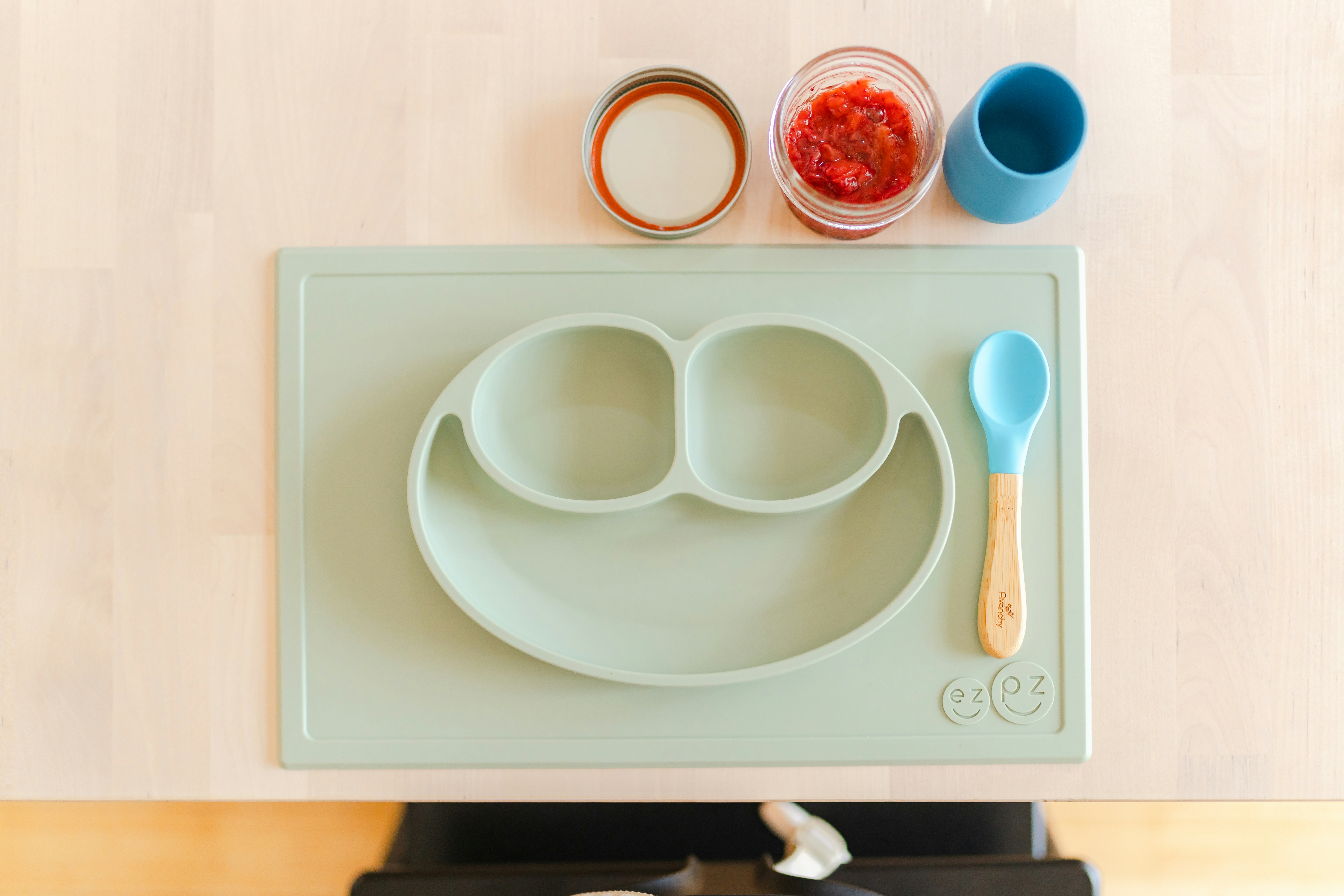
Before my twins started solids, I spent an embarrassing amount of money on baby feeding gear. Matching silicone plates in four colors. A set of 12 bamboo spoons that looked beautiful in the box. A fancy steamer-blender combo that I used exactly twice. A hand-carved wooden bowl from Etsy that Beckham threw across the kitchen on day one -- I watched it sail through the air in slow motion while sweet potato splattered on the wall behind it.
Six months later, about 80% of what I bought was shoved in a cabinet, untouched. The stuff that survived daily use? A handful of boring, practical items that could handle being thrown, chewed on, and run through the dishwasher 400 times without cracking or warping.
As a registered dietitian, I've helped a lot of families through the starting solids phase. And every single time, the list of gear they actually need turns out to be much shorter than the baby registry websites want you to think. So here's the real list -- what I bought for Beckham and Dylan, what I kept, what I returned, and what I now tell every parent who asks me.
The American Academy of Pediatrics recommends starting solids around 6 months, when your baby can sit up with support and shows interest in food. Some pediatricians may suggest 4 months depending on the child. Talk to yours before diving in -- especially if there's a family history of food allergies. A 2022 review in Pediatrics (PMID: 35726132) found that early introduction of allergenic foods like peanuts and eggs between 4-6 months actually reduces allergy risk, which shifted how a lot of us approach first foods.
The non-negotiables (buy these first)
1. Suction bowls and plates
The number one problem with baby feeding: everything ends up on the floor. Suction bowls solve this. They stick to the high chair tray or table and actually stay put -- most of the time. I say "most of the time" because Dylan figured out the peel-up trick at about 7 months. But until then, suction bowls bought us weeks of sane mealtimes.
The divided sections matter too. Babies this age do better when foods aren't touching each other. I know it sounds fussy, but it's real -- a 2019 study in Appetite (DOI: 10.1016/j.appet.2019.104249) found that food presentation, including separation of items, affects how much toddlers eat. The divided plate is actually doing something.
ezpz Mini Mat (all-in-one plate + placemat)
Suctions directly to the table or high chair tray. Silicone, dishwasher safe, and divided into sections. The mini size is right for 6-12 months. When they figure out how to peel it up (and they will), you've had a good run.
View on Amazon2. Soft-tip spoons
Regular metal spoons are too hard on baby gums. Soft-tip silicone spoons are gentler and easier for babies to learn with -- both when you're spoon-feeding purees and when they start attempting to feed themselves. You'll want 6-8 in rotation because they disappear constantly. We found at least three under the couch cushions and one in Beckham's shoe.
If you're going the baby-led weaning route instead of purees, you'll still want soft spoons available. Research published in BMJ Open (DOI: 10.1136/bmjopen-2015-010665) found that babies introduced to finger foods and self-feeding alongside spoon-feeding had similar developmental outcomes to those in traditional spoon-feeding approaches -- so there's no single right answer. Use whatever approach works for your kid and your sanity.
NumNum Pre-Spoon GOOtensils
Designed for babies just learning to self-feed. The flat head scoops food easily and the soft silicone is gentle on gums. Dishwasher safe. Think of these as training wheels before real spoons.
View on Amazon3. Bibs that actually work
Cloth bibs get soaked in one meal. Then you're running extra laundry on top of everything else you're already running. Silicone bibs with catch pockets wipe clean in literally 10 seconds and go in the dishwasher. I did not understand how much of my life cloth bibs were stealing until I switched.
We went through three cloth bibs per meal with the twins. After switching to silicone, we used two bibs total per day, wiped them down after each meal, and ran them through the dishwasher at night. That's it.
Bumkins silicone baby bibs (3-pack)
Waterproof, stain-resistant, and the pocket actually catches food instead of funneling it onto their lap. Adjustable neck closure grows with your baby. Rinse and toss in the dishwasher -- bib laundry is officially not your problem anymore.
View on Amazon4. Sippy cups for the water introduction
Around 6-9 months, you start offering small amounts of water alongside solid foods. The American Academy of Pediatrics recommends no more than 2-4 ounces per day at this age -- water isn't replacing breast milk or formula, just accompanying meals. For the cup itself, skip anything with complicated valves that you have to disassemble to clean. Mold grows in those valves and you won't see it until it's bad. Simple straw cups or open cups work better.
Dylan loved her straw cup. Beckham threw every cup we offered for about three weeks before deciding he was okay with water. This is normal. Offer it, don't stress when they reject it.
Munchkin weighted straw cup
The weighted straw moves with the liquid, so baby can drink at any angle without tilting the cup. Spill-proof, easy to clean, and the handles help small hands grip it. Start with the 7oz size.
View on AmazonThe nice-to-haves (get these second)
5. Small food storage containers
When you batch-cook purees, mash bananas ahead of time, or have leftover mashed sweet potato, you need somewhere to put it. Small 2-oz containers work better than repurposed yogurt tubs because they stack, seal well, and you can grab exactly one portion without thawing a huge block of food.
Glass containers are fine. BPA-free plastic is fine. The important thing is that they're labeled so you know what's in them and when you made it. Baby food keeps 3 days in the fridge and 3 months in the freezer -- which sounds like a long time until you find a mystery cube of something brown in the back of your freezer.
OXO Tot Baby Blocks freezer storage containers
2oz portions, perfect for purees. The date dial on top is genuinely useful. Stackable, freezer-safe, dishwasher-safe, and comes in a 6-pack so you can batch prep a week of food in one session.
View on Amazon6. A splat mat
Food will end up on the floor. A lot of it. This is not a failure of parenting -- it is a developmentally normal part of learning to eat. Research in Physiology & Behavior (PMID: 26188450) actually found that food play and mess during early feeding is associated with better food acceptance later, because it gives babies low-stakes exposure to new textures. So the mess is doing something. But you still have to clean it up.
A splat mat makes that cleanup take 30 seconds instead of scrubbing your grout with a toothbrush. I held off buying one for three months and I regret every week I spent on my knees cleaning the floor under the high chair.
Gimars large waterproof splat mat
53 inches across, which covers a serious area under the high chair. Waterproof, BPA-free, and rolls up for storage when you're done. Shake the crumbs outside and wipe it down -- no vacuuming needed after every meal.
View on Amazon7. A baby food maker (only if you're doing lots of purees)
This one's genuinely optional. If you're doing baby-led weaning, you don't need it. If you're doing traditional purees, a steamer-blender combo saves time when you're batch cooking. Your regular blender does the same job with an extra step -- you steam in one pot, blend in the blender, done.
I bought a fancy one and used it maybe a dozen times. If I could do it over, I'd have used my regular blender and spent the money on more storage containers. That said, if batch cooking is a big part of your plan and you want everything in one machine, it's convenient.
Baby Brezza glass baby food maker
Steams and blends in one machine with a glass bowl (not plastic). Good capacity for batch cooking. If you're making purees multiple times a week, this saves real time. If you're only making them occasionally, use your blender.
View on AmazonWhat you can skip entirely
They sound clever but they're a cleaning nightmare. Food gets stuck in the seams and corners, and if you don't scrub them perfectly, mold grows inside where you can't see it. Just use bowls with a spoon.
Babies take milk at room temperature or even cold. If you genuinely need to warm a bottle, run it under warm tap water for 60 seconds. I know people who use bottle warmers every day. I know more people who bought one and it's in a box in the garage.
Your regular blender does everything a Baby Bullet does. Add a splash of water, breast milk, or formula to thin the puree. Save the $60-80.
You need 6-8 soft-tip spoons. Not 20. Not a set with 12 different sizes for 12 different stages. Six to eight. That's the number.
Pre-made baby purees in pouches are convenient in a pinch but they don't expose babies to real food textures or flavors the same way home-cooked food does. A 2021 study in JAMA Pediatrics (DOI: 10.1001/jamapediatrics.2020.5485) found that infants who ate more homemade food had better dietary quality at 18 months compared to those eating mostly commercial baby food. Worth knowing before you sign up for a subscription.
The minimal starter kit
If you're starting solids in the next month and want to buy everything in one go:
- 3-4 suction bowls or plates
- 6-8 soft-tip spoons
- 3 silicone bibs
- 2 straw sippy cups
- 1 splat mat
- 6 small storage containers (only if you're batch prepping)
Total cost: roughly $100-150. That covers everything. Don't let anyone tell you that you need more than this to start.
When to buy each thing
You don't have to buy it all at once. This is how I'd sequence it:
- 4-5 months: Get bibs, bowls, and spoons so you're ready when the time comes
- 6 months: Start solids -- you'll use everything daily from here
- 7-8 months: Add sippy cups once they're eating consistently at meals
- 9-10 months: Add the splat mat if floor cleanup is taking over your life (it will be)
One thing I'd change about how we started
I wish someone had told me to let the twins lead more from the beginning. I was so focused on making sure they got enough food that I was rushing meals, offering more bites than they wanted, and getting anxious when they turned their heads away. That refusal to keep eating? It means they're full. Babies have good appetite regulation when we don't override it.
A landmark study by Leann Birch and colleagues (PMID: 9463007) showed that infants are actually very good at self-regulating caloric intake when allowed to eat responsively -- and that parental pressure to eat more disrupts that regulation over time. I read that paper in grad school and still had to relearn it with my own kids. So I'm passing it along: trust them. They'll eat what they need.
Cleaning and maintenance
If it's not dishwasher-safe, don't buy it. This is non-negotiable with twins. You don't have time to hand-wash tiny baby spoons at 7 PM when someone is crying and someone else is trying to climb the dishwasher door while it's open.
Run the dishwasher at night, unload in the morning, everything's ready for the day. Keep extras of everything so you're never scrambling for a clean bowl in the middle of a meltdown.
Buy duplicates of whatever your baby actually uses and likes. When you find the spoon they'll accept, or the bowl they don't throw, buy two more. Baby products get discontinued at exactly the wrong moment. We learned this when Beckham's favorite suction mat was discontinued and we had three months of him rejecting every replacement we tried.
What I'd tell a friend who's about to start
It's going to be messy. Spectacularly, hilariously messy. Beckham got sweet potato in his ear on day two and I still don't understand the physics. Dylan once sneezed a mouthful of pureed peas and hit the wall three feet away. That's normal. That's what the bibs and the splat mat are for.
Buy the minimum, see what your baby actually uses, and add from there. Dylan loved the suction bowls and used them for months. Beckham figured out how to peel them off the tray by week two and we ended up just putting food directly on the tray. Neither approach was wrong. You'll figure out what works for your kid, and it won't necessarily match what worked for the influencer's kid on Instagram.
The only gear that's truly non-negotiable: something to catch the food (bibs), something to serve it in (bowls or plates), and something to eat with (spoons). Everything else is optional. The baby product industry wants you to believe starting solids requires a $500 setup. It doesn't.
Related Articles
Oat Milk vs Whole Milk for Toddlers
Choosing the right milk for picky eaters who won't eat meat.
Baby BalanceMy Toddler Won't Eat: What Actually Works
Evidence-based strategies for picky toddlers without power struggles.
Baby BalanceFirst Foods for Busy Parents
Simple, stress-free guide to starting solids.

Written by Erin Albert, RD
Registered Dietitian with 15+ years experience helping busy families find balance. Mom of twins who gets the real-life struggles of feeding a family.
Work With Erin