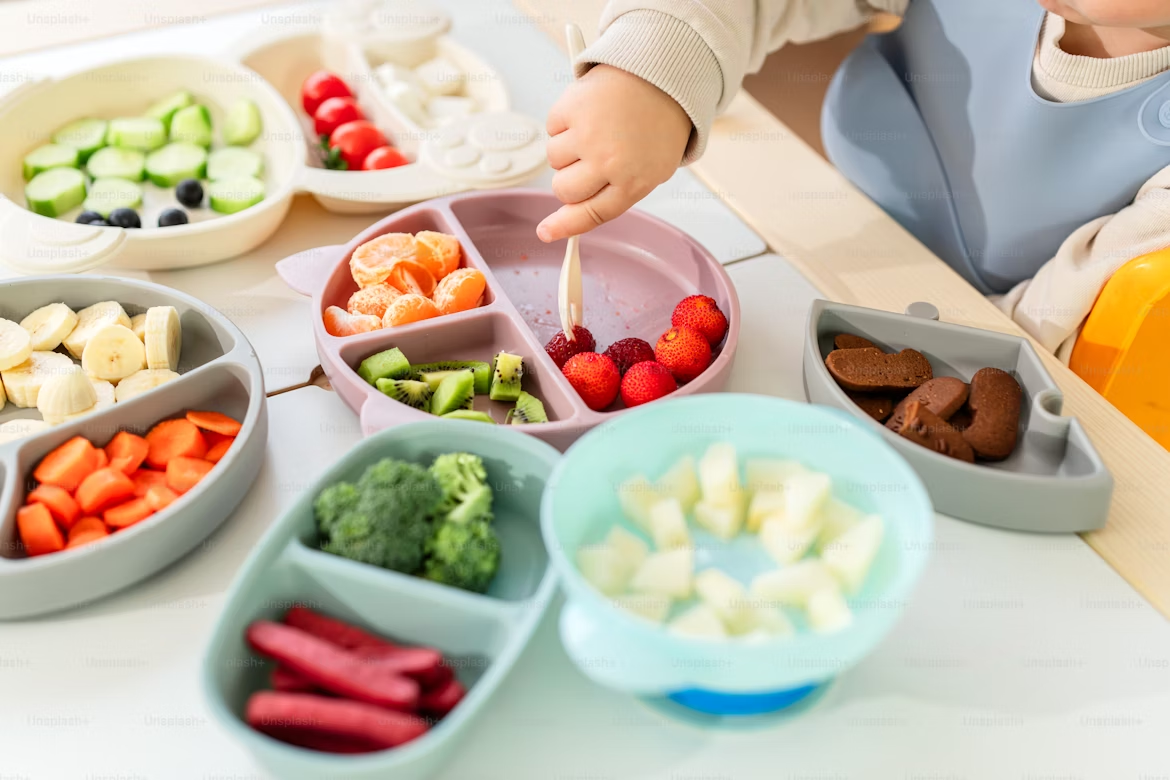
The Instagram version vs. what actually happens
When my twins were approaching 6 months, I went down the research rabbit hole. Purees or baby-led weaning? Rice cereal or skip it? Organic only? I have a Master's in nutrition science and I still felt overwhelmed by the contradictory advice out there.
Here's what I wish someone had told me: most of the debate doesn't matter that much. Purees are fine. Baby-led weaning is fine. A combination of both is fine. What matters is that your baby is getting exposed to real food in a safe way, at their own pace. The first year of solids isn't about replacing breast milk or formula. It's practice. Your baby is learning to move food around their mouth, experience new flavors, and sit at the table with the family. That's it.
If the only thing your baby ate today was two bites of banana and some yogurt off your finger, that counts. They're still getting their nutrition from milk. This is just the beginning.
Iron matters more than you'd think
Around 6 months, babies start running low on the iron stores they were born with. Breast milk has iron but not enough to keep up with a growing baby's needs. This is the one area where I get specific with families: make iron-rich foods a priority when you're choosing what to offer first.
That means mashed lentils, pureed beans, finely shredded chicken or beef, or iron-fortified infant cereal. And here's a clinical tip most parents don't hear: pair iron-rich foods with a little vitamin C to boost absorption. A few mashed strawberries alongside some lentil puree does the trick. A 2012 study in the American Journal of Clinical Nutrition confirmed that vitamin C can increase non-heme iron absorption by up to 67% in infants.
Don't aim for perfect portions. A tablespoon or two of solid food per sitting is plenty at 6 months. Some of it will end up on the floor. That's fine.
Textures are scary (for parents, not babies)
The gagging thing freaks everyone out. When Beckham gagged on a piece of soft avocado at 7 months, my husband nearly called 911. But gagging and choking are different. Gagging is loud, dramatic, and your baby's face turns red. Choking is silent and their face turns blue. Gagging is your baby's safety reflex working exactly as it should.
Start with smooth purees or very soft foods if that feels comfortable, then gradually introduce lumpier textures. By 8-10 months, most babies can handle soft finger foods like small pieces of ripe banana, well-cooked pasta, or steamed sweet potato. The progression looks something like this:
- 6-8 months: smooth purees, mashed foods, very soft strips they can gum
- 8-10 months: lumpier textures, soft finger foods, things they can pick up and self-feed
- 10-12 months: modified versions of what the rest of the family eats
The families I see who skip straight from purees to only purees for months on end sometimes have a harder time transitioning to real food textures later. Research from the Complementary Feeding guidelines (ESPGHAN, 2017) suggests introducing lumpy textures before 9 months reduces the risk of feeding difficulties at 12 months.
Eat with your baby. Seriously.
This one is so simple that people overlook it. Babies learn to eat by watching you eat. When you sit at the table together and put some of your food on their tray (minus the salt and spice), you're teaching them that this is what food looks like, this is how we eat it, and this is a normal part of the day.
I know family meals at 6 months feel chaotic. Believe me, with twins it was pure survival mode. But even just sitting together for five minutes while they smear banana on their face counts. You're building the habit early, and it pays off later when you're not making three separate meals every night.
When is your baby actually ready?
Ignore the "start at exactly 6 months" rule if your baby isn't showing readiness signs. Some babies are ready at 5.5 months, some not until closer to 7. The calendar date matters less than these physical signs:
- They can sit upright with minimal support
- Good head and neck control
- They're watching you eat and reaching for your food
- The tongue-thrust reflex has faded (they stop pushing food out of their mouth automatically)
If your baby is doing all four, they're telling you they're ready. If they're only doing one or two, give it another week or two and check again.
The allergy thing has changed
When I was in grad school, the guidance was to delay peanuts and eggs until after age 1. That recommendation got completely reversed. The LEAP study (Learning Early About Peanut Allergy), published in the New England Journal of Medicine in 2015, found that early introduction of peanut protein between 4-11 months actually reduced peanut allergy by 81% in high-risk infants.
Current guidelines from the American Academy of Pediatrics and the AAP say to introduce common allergens early and often, unless your pediatrician specifically tells you otherwise. Thin peanut butter mixed into a puree, a small amount of well-cooked scrambled egg, a bit of yogurt. One new allergen at a time, wait a couple of days, watch for reactions.
Making this work when you're exhausted
Here's the truth nobody puts in their baby food cookbook: there will be days when you open a jar of store-bought baby food and call it dinner. And that's completely fine. Commercial baby food is regulated and nutritionally adequate. The "everything homemade" pressure is unnecessary guilt.
What I actually did with my twins: I batch-cooked one or two things on Sunday (usually sweet potato puree and some lentils) and froze them in ice cube trays. During the week, I popped out a cube or two and supplemented with store-bought pouches. Maybe once or twice I shared whatever I was eating, mashed up with a fork.
That's it. No elaborate meal plans. No color-coordinated Instagram trays. Just real food, offered consistently, without stress. Your baby will eat when they're ready, and they'll eat more as they grow. The best feeding plan is one you can actually stick with on a random Wednesday when you're running on four hours of sleep.
Baby Feeding Essentials
These make starting solids easier and less stressful:
- Bumkins Silicone Baby Plates with Suction - Sticks to table, reduces mess
- NumNum Pre-Spoon Baby Utensils - Perfect for self-feeding
- Baby Bullet Baby Food Maker - Quick batch cooking
- Munchkin Baby Food Freezer Cubes - Portion and freeze homemade food
- OXO Tot Self Feeding Spoons - Easy for baby to grip
We earn a small commission if you purchase through these links at no extra cost to you.
What I tell every new parent
Starting solids feels like a big deal because it is a new phase. But your baby doesn't need a perfect introduction to food. They need exposure, patience, and a parent who isn't panicking. Sit together. Offer real food. Let them make a mess. Try again tomorrow.
Fifteen years of clinical practice and raising my own twins taught me the same thing: the families who do best with feeding are the ones who lower the stakes. Your baby will figure out eating. Your job is to keep showing up at the table.
Related Articles
Oat Milk vs Whole Milk for Toddlers
Choosing the right milk for picky eaters who won't eat meat.
Baby BalanceMy Toddler Won't Eat: What Actually Works
Evidence-based strategies for picky toddlers without power struggles.
Baby BalanceBaby Feeding Essentials
What you actually need to feed your baby in the first year.

Written by Erin Albert, RD
Registered Dietitian with 15+ years experience helping busy families find balance. Mom of twins who gets the real-life struggles of feeding a family.
Work With Erin