The lunch problem most dads won't admit to
My husband Joe eats lunch at his desk. Or he used to not eat lunch at his desk, which was the actual problem. For years, "lunch" in his day meant whatever was fastest -- a bag of chips, a granola bar, sometimes nothing at all until he walked through the front door at 6 PM and ate half the kitchen while standing over the counter. He genuinely believed he wasn't eating that much. Then he'd wonder why he couldn't lose weight when he was "barely eating" during the day.
The answer, once I got him to write down what he actually ate and when, was obvious: he was chronically undereating until 6 PM and then making up for it in one sitting. Almost all of his daily calories came between dinner and bedtime. His body spent the entire workday running on fumes -- low blood sugar, high cortisol, that fuzzy-headed 3 PM feeling he'd been managing with a second coffee for years.
This pattern is more common in men than most nutrition research acknowledges. A study published in the International Journal of Obesity found that men who ate their largest meal at lunch lost 25% more weight than those who ate the same total calories but concentrated them at dinner, even when the researchers controlled for exercise and total calorie intake. Timing matters in a way that most people skip past when they're focused on just counting calories.
The fix wasn't a diet or a meal plan or any elaborate intervention. It was getting Joe to actually eat a real lunch on workdays. Specifically, a high-protein lunch he could put together in under 10 minutes without needing a microwave or a lot of thought. Within a few weeks, the afternoon energy crash disappeared. The late-night pantry raids stopped. He lost about 8 pounds over two months without trying, because he wasn't eating dinner like a man who'd been fasting all day.
What follows is what I pack for Joe and what I recommend to the men I work with as clients. Simple formats. High protein. Minimal prep. Nothing that requires you to be a meal-prep person, because most men are not meal-prep people and that's fine.
Why protein at lunch actually matters (more than most people realize)
Before the lunch ideas, a quick note on protein specifically, because this comes up constantly with my male clients and the confusion is real.
Protein is the macronutrient most directly tied to satiety. It keeps you full longer than the equivalent calories from fat or carbohydrates, and it prevents the blood sugar spikes and crashes that cause the 3 PM slump. A 2005 study in the American Journal of Clinical Nutrition found that increasing protein intake from 15% to 30% of total calories reduced total calorie intake by an average of 441 calories per day without any deliberate food restriction. The participants weren't trying to eat less. They just weren't as hungry.
For a typical adult man doing moderate activity, somewhere between 25 and 40 grams of protein at lunch is a reasonable target. That's specific enough to plan toward but not so precise that you need to weigh your food. A chicken breast is roughly 35 grams. A can of tuna is about 25 grams. Greek yogurt has around 17 grams per cup. You don't need a nutrition app to get there.
The other reason protein matters at lunch specifically: muscle protein synthesis. Your body continuously breaks down and rebuilds muscle tissue, and this process requires a steady supply of amino acids throughout the day. Eating all your protein at dinner means your body spends most of the day in net breakdown mode before shifting to synthesis at night. Distributing protein across meals is better for maintaining muscle mass, particularly as men get older. A 2012 study in the Journal of Nutrition found that distributing protein evenly across three meals stimulated muscle protein synthesis 25% more than consuming the same amount of protein concentrated in one meal.
The wrap: the easiest lunch format that exists
I pack Joe a wrap probably three days a week because it requires almost no thought and he can eat it at his desk without making a mess. The formula: large tortilla, protein, something crunchy, something creamy. Roll it up, wrap in foil, done.
The combinations that repeat most in our house:
- Turkey, spinach, hummus, and crumbled feta (about 35 grams protein)
- Leftover grilled chicken with mixed greens and a drizzle of Greek yogurt ranch (about 40 grams protein)
- Deli roast beef with sharp cheddar, mustard, and arugula (about 30 grams protein)
- Canned tuna mixed with a spoonful of plain Greek yogurt instead of mayo, plus sliced avocado (about 30 grams protein, and yes, the yogurt-instead-of-mayo swap is worth trying before you judge it)
The soggy wrap problem: wrap in parchment paper first, then foil. The parchment absorbs excess moisture from vegetables so the tortilla stays intact until noon. This sounds like an unnecessary step and then the first time you try it you'll do it every time.
The bowl: when you have last night's rice in the fridge
If there's leftover rice, quinoa, or pasta in the fridge, you're about five minutes from a solid lunch. Bowls work because they're forgiving -- nothing needs to hold together, proportions don't matter much, and you can use whatever protein you have without it looking like an afterthought.
The formula I give my male clients: grain base, protein, two vegetables, something with flavor. Looks complicated written out. Takes about 3 minutes to assemble.
- Brown rice with canned tuna, cucumber, and cherry tomatoes, dressed with soy sauce and a few drops of sesame oil
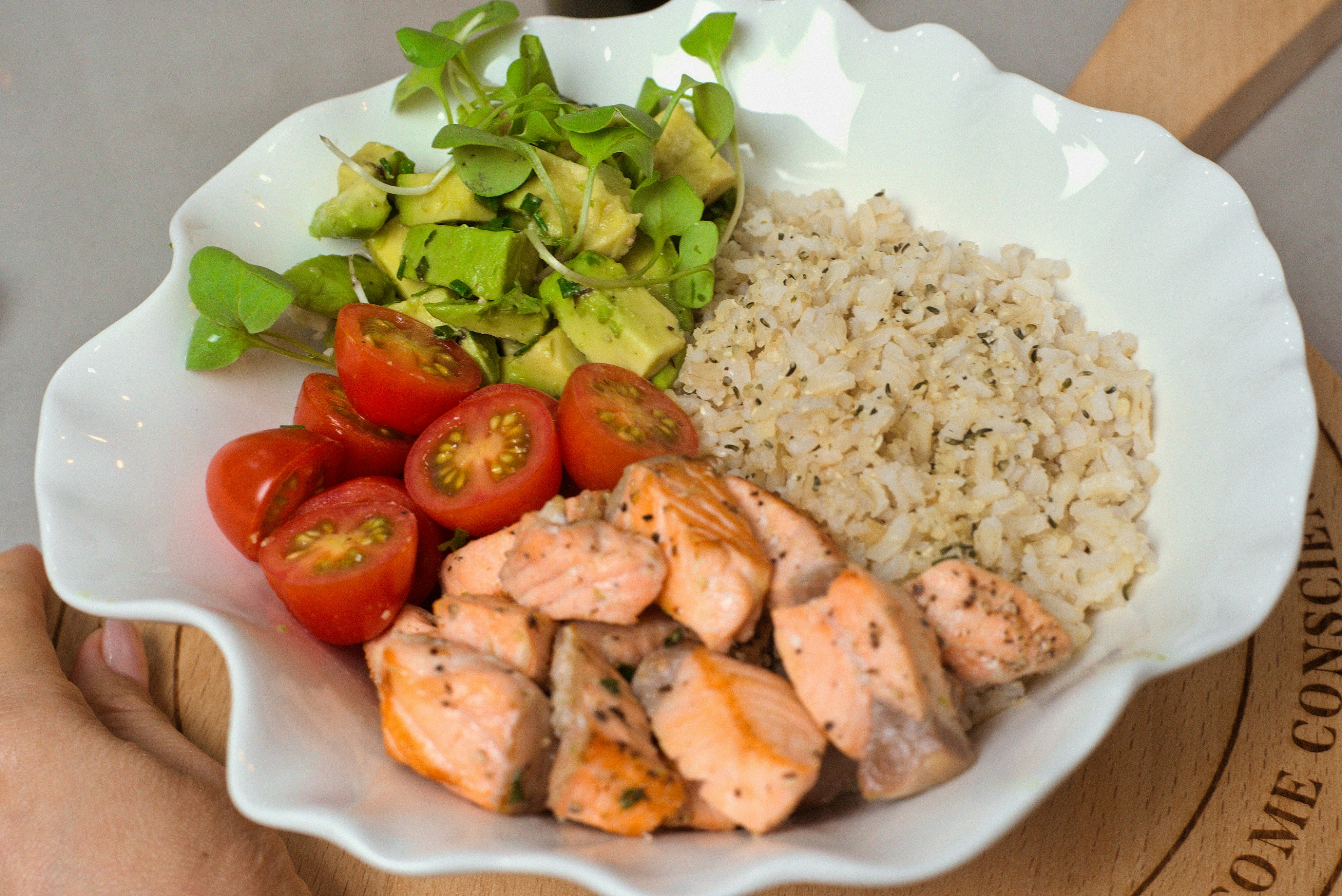
- Quinoa with leftover salmon, sliced avocado, and roasted red peppers, with lemon juice squeezed over the top
- Spinach base with grilled chicken, corn, and black beans, with salsa and a spoonful of plain Greek yogurt instead of sour cream
- White rice with hard-boiled eggs, shredded rotisserie chicken, and whatever vegetables are about to go bad in the crisper drawer
That last one is the most common bowl in our house mid-week. The rotisserie chicken from Sunday is usually still good through Tuesday or Wednesday. Hard-boiled eggs last a week in the fridge if you boil a batch on the weekend. The vegetables are whatever needs to be used. Total assembly time: 3 minutes. Total cost: roughly $3 to $4 per serving versus $12 to $15 at a fast-casual restaurant for similar nutrition.
One thing worth saying about the rotisserie chicken strategy: it is genuinely the most efficient protein source available at most grocery stores. A full bird costs $6 to $8 and yields about 4 to 5 meals of protein when you strip it properly. Joe picks one up at Publix every Sunday. By Tuesday it's in lunch bowls. By Wednesday the remaining bits go into soup or pasta. Nothing gets wasted, and we never run out of lunch protein.
For the days when lunch doesn't happen
Some days, a real lunch just isn't going to happen. Back-to-back calls, a hard deadline, a problem that has to be solved right now. I work with men who genuinely cannot leave their desks from 11 AM to 3 PM some days, and telling them to meal prep beautiful lunches doesn't help them. What helps is having a fallback that doesn't involve the vending machine.
What Joe keeps in his desk drawer:
- Beef jerky -- look for brands with under 5 grams of sugar per serving. Chomps and Country Archer are both good. The jerky in gas stations is usually not.
- Individual almond butter packets -- Justin's makes small single-serve packs that don't require refrigeration and have about 7 grams of protein each
- Mixed nuts -- almonds and cashews are highest in protein per handful, and a small bag gives you 6 to 8 grams in about 20 nuts
- RXBars -- I'm not generally a protein bar person, but RXBars have actual ingredients (egg whites, dates, nuts) with no ingredient list that requires a chemistry background to read
The desk drawer stash is not a substitute for actual meals. It's a harm reduction strategy. Having 200 to 300 calories of real protein available when lunch evaporates is the difference between managing the afternoon and hitting the 3 PM wall so hard you can't think straight until dinner.
The rotation that actually sticks long-term
Most men will prep lunches for two or three days before abandoning the system if it's complicated. I've watched Joe try and give up on elaborate meal prep more than once. The current system has lasted because it's three options, repeated weekly, with almost all the protein already cooked from weekend dinners.
- Monday: Turkey or chicken wrap with an apple and a handful of almonds (about 40 grams protein total)
- Tuesday: Leftover dinner protein in a bowl over whatever grain is in the fridge with whatever vegetables are around
- Wednesday: Chicken Caesar wrap or rotisserie chicken bowl with Greek yogurt on the side (about 45 grams protein total)
- Thursday: Leftovers from earlier in the week, or he eats out -- this is deliberately the no-plan day
- Friday: Joe works from home on Fridays and keeps it minimal -- a protein shake, banana, and nuts, or eggs if he has 10 minutes
Total prep time for Monday through Wednesday lunches: about 15 minutes on Sunday, mostly just packing the wraps and portioning snacks. The protein is already cooked because we made extra at Saturday or Sunday dinner. I'm assembling, not cooking.
The deliberate Thursday no-plan is something I added after Joe kept abandoning the system when Thursday lunch fell apart. Now Thursday is officially unplanned. He can eat out, eat leftovers, or skip it without it feeling like a failure. That one small permission makes the Monday through Wednesday structure more sustainable, because there's no expectation of perfection.
What actually changed when Joe started eating lunch
Within about two weeks of consistent lunches, a few things shifted. He stopped raiding the pantry after the kids went to bed. His 3 PM energy crash disappeared, or at least faded to the point where he stopped buying a second coffee every afternoon. He started going to bed without feeling uncomfortably full from eating most of his day's food after 7 PM.
Over the following two months, he lost about 8 pounds without any deliberate restriction. He wasn't trying to lose weight. He was just eating enough protein at lunch that he didn't need to eat four times more at dinner. The calorie deficit happened automatically because his hunger was better regulated throughout the day.
This is actually the mechanism behind a lot of sustainable weight management that gets lost in the noise about specific diets: protein at regular intervals keeps hunger hormones (specifically ghrelin) in check, which means you make better food decisions later in the day without having to rely on willpower. Willpower is a finite resource. You burn through it faster when you're hungry. Eating enough at lunch is, in a weird way, a willpower conservation strategy.
Most men I work with don't need a complicated nutrition plan. They need to actually eat lunch. If you can get 30 to 40 grams of protein in the middle of the day, you'll feel better in the afternoon, eat less at night, and probably sleep better because you won't be going to bed on a full stomach after eating half your daily calories at 9 PM. That's the whole thing. A wrap or a bowl, five minutes of prep, one problem solved.
Protein & Meal Prep Essentials
Level up your meal prep game:
- 3-Compartment Meal Prep Containers - Keeps protein, carbs, and veggies separate
- Optimum Nutrition Gold Standard Whey Protein - Clean ingredients, mixes well
- Arctic Zone Insulated Lunch Box for Men - Fits 2-3 containers plus snacks
- BlenderBottle Classic (2-pack) - Leak-proof, perfect for protein shakes
- Hydro Flask Water Bottle 32 oz - Keeps drinks cold all day
We earn a small commission if you purchase through these links at no extra cost to you.
Related Articles

Written by Erin Albert, RD
Registered Dietitian with 15+ years experience helping busy families find balance. Mom of twins who gets the real-life struggles of feeding a family.
Work With Erin